


First one. Quick word on what this is, then we go to work.
Every Monday: the setups I’m actually watching — ticker, entry, target, stop, one line on why. Then the tab — every call from the week before, settled. Hit, stopped, or never triggered. Nothing edited, nothing quietly deleted.
I’ve been getting things wrong since 2006. The difference between me and the man in your feed with the 90% win rate is that you’ll get to watch me be wrong.
The Tab — Week Zero
Nothing here. First letter, nothing to settle yet.
Which makes this the only week I get to look good for free. From next Monday this section carries every call above — hit, stopped, never triggered — with the running total underneath. Red weeks get the same font size as green ones. If a setup dies, it dies in public.
Record: 0 calls closed. 0.0R. Starts today.
The tab starts at zero. The account doesn’t.
Two of the four names below, I’m already long. Not “watching.” Long, with money.
KHC — 2,000 shares, filled at 25.11. Currently red.
MTCH — 1,500 shares, filled at 38.77. Also currently red.
Look at the second one. Below, I say I want MTCH on strength through 40. I’m in at 38.77 — under my own level. So my entry isn’t better than yours. It’s earlier, and right now it’s worse. Early is just wrong with a kinder word attached, and it’s showing up in the P&L as we speak.
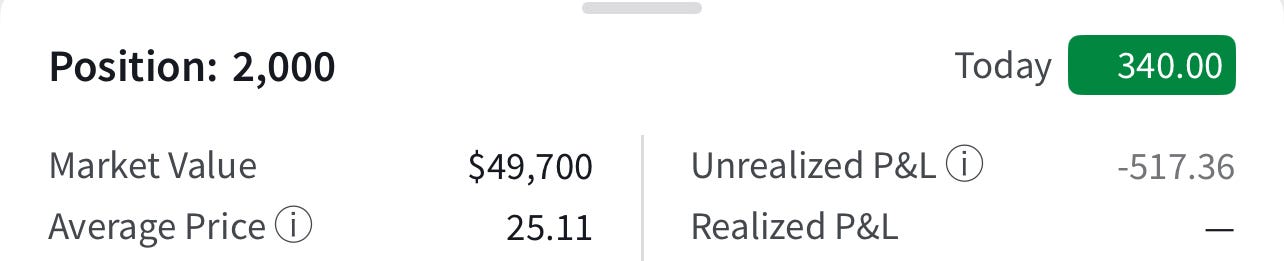

The rule from here on: if I’m in a name, the setup says so. When I get out, the next letter says so — at the price I actually got out, not the one I wish I’d got.
Dollar sizes are mine, not a template. What matters is the percentage of your account, and that number is yours to work out — not mine to hand you.
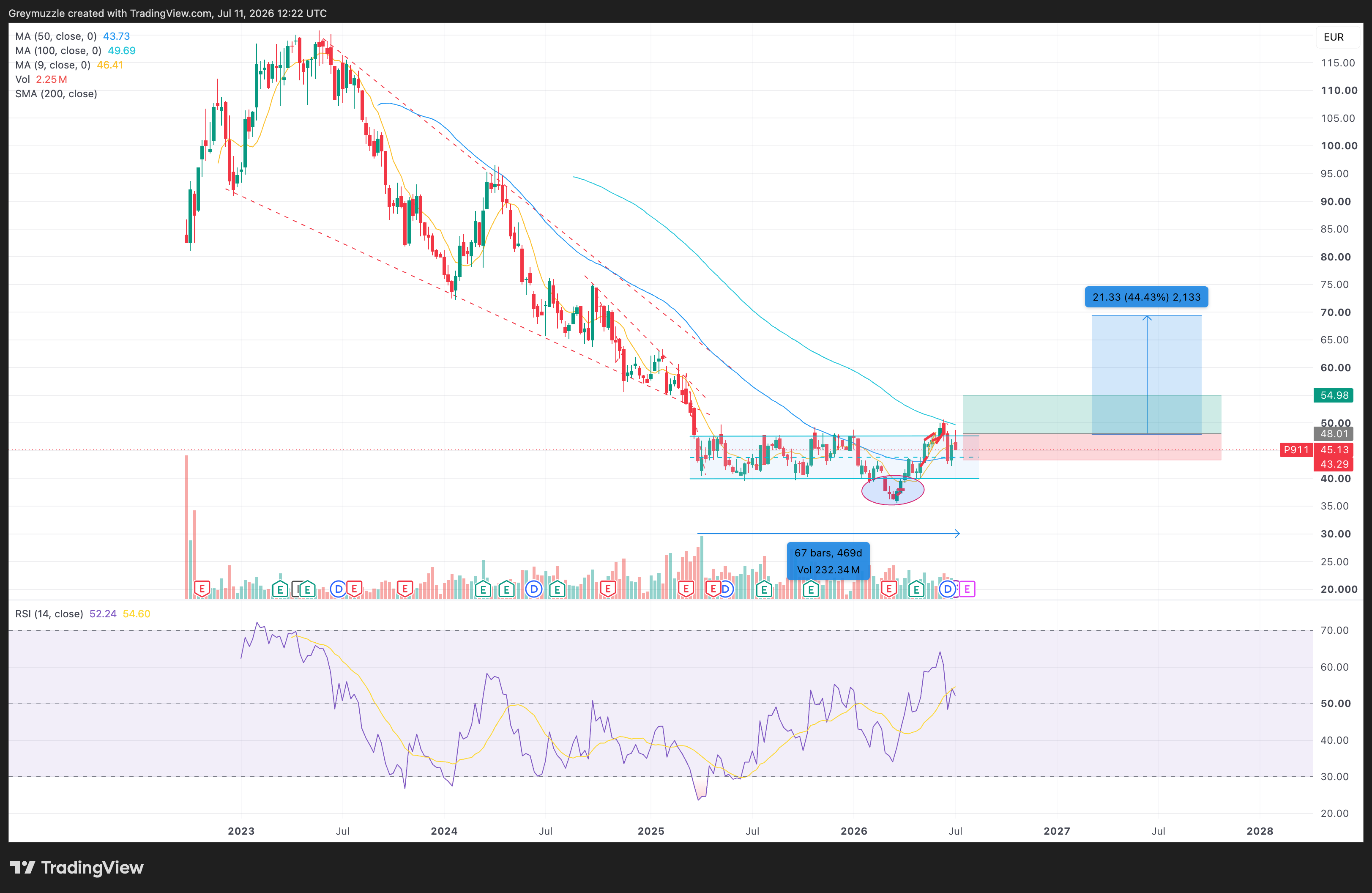
$P911 — Porsche AG. The broken icon, trying to turn over.
Everyone wants to own the turnaround. Nobody wants to own the part right before it — where the numbers are still ugly and the story still sounds like an excuse.
Porsche has spent nearly two years — 469 days, 67 bars — carving a base between roughly 43 and 48 after falling out of the sky from 120. Textbook downtrend-into-base: the selling exhausts, the range gets boring, the last weak hands get shaken out. There was a clean washout under the range that got reclaimed — a spring — and price is now leaning on the top of the box.
Entry: range top, on strength through ~48
Primary target: ~55
Secondary target: ~69, the full measured move — +21 points, +44% off the base
Stop: ~41, below the reclaimed washout low
Why: two years of base is stored energy, and a reclaimed shakeout plus a new operator at the wheel is how a left-for-dead marque re-rates — if the fundamentals show up.
The fundamentals, both sides — because that’s the entire point of this letter.
The case for: a margin-recovery story, with 2025 as the earnings trough and 2026 the start of the climb back. Fortress balance sheet, a new CEO out of Ferrari and McLaren who actually knows how to run a performance marque, a narrow moat, and a fair value pinned near €46 — roughly where it trades today.
The case against, and it isn’t small: China is soft and it’s 23% of revenue. US tariffs are a €700M hole. The ICE phase-out opens a volume vacuum with nothing bridging the gap. EPS fell 88% — €0.47 for FY25 against €3.94 — deliveries down 15%, double-digit margins don’t return until 2028 on the kind read, and Barclays has it flat-out Underweight.
So: a chart that’s set up sitting on top of a business that’s still bleeding, with the recovery two-plus years out. Small size, entry on confirmation, stop honored. You’re betting the turnaround starts — not that it’s already here.
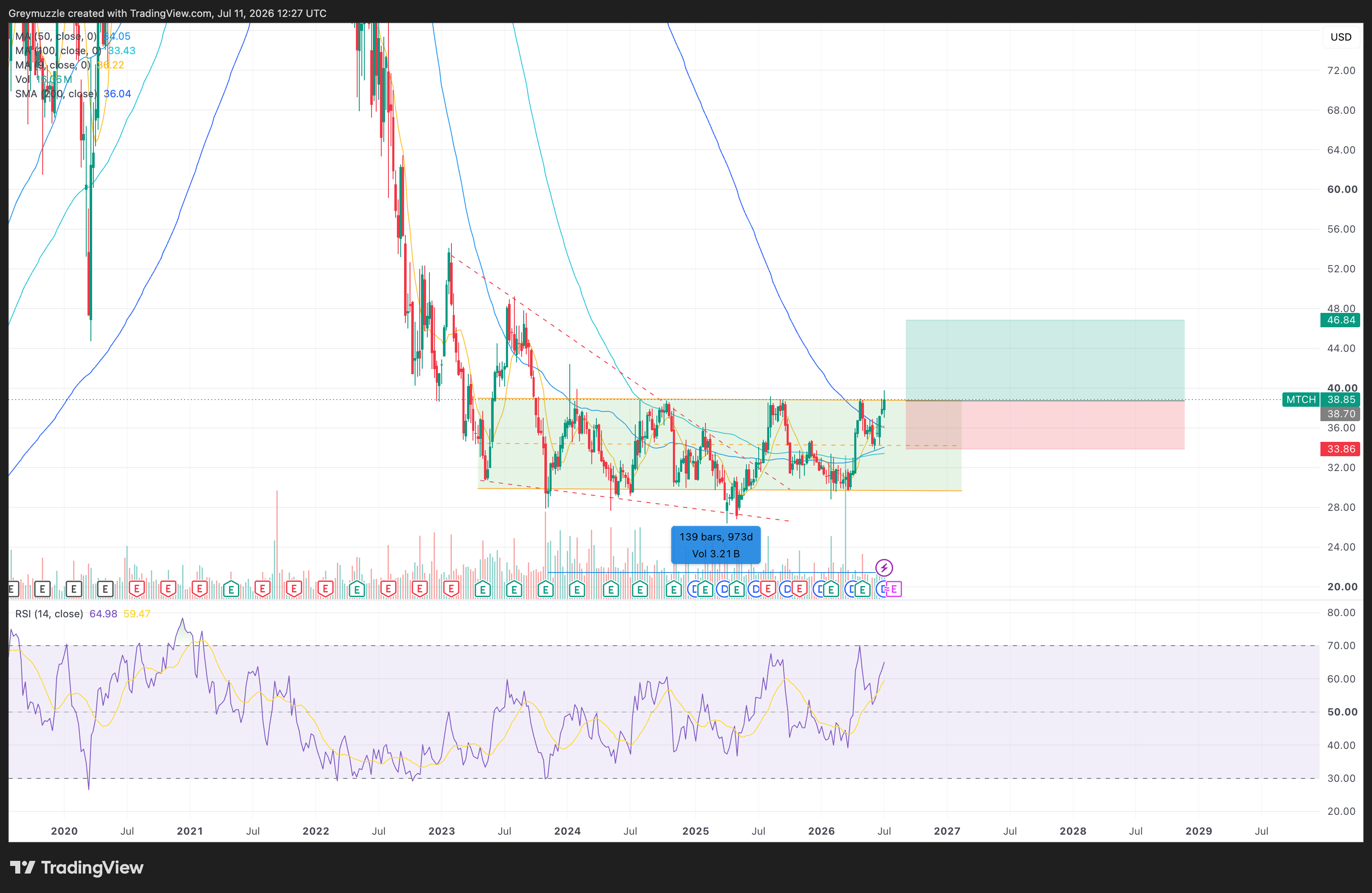
$MTCH — Match Group. The turnaround that’s actually turning.
Most “turnarounds” are a story people tell while the chart keeps bleeding. Once in a while the tape starts agreeing with the story — and that’s the only version worth trading.
This is the setup I like best: the long box. Three and a half years of it — 139 bars, 973 days — chewed sideways between roughly 28 and 45 after falling out of the sky from 120. Now price has pushed to the top of the range, it’s trading above every moving average, and it’s coming with volume. That last part matters — a lift to the range top on rising volume is a different animal from one that drifts up on nothing.
Entry: range top, on strength through ~40
Target: ~47, into the shelf above
Stop: ~34, back inside the box
Why: three and a half years of stored energy, price finally above all the averages with volume behind it, and the fundamentals turning at the same time — chart and business pointing the same direction is the whole trade.
The case underneath — and where it could break.
What’s working: Tinder registrations have turned up for the first time in two years — the actual metric everyone was waiting on. Hinge is growing 26%, EBITDA margin sits near 40%, the stock is cheap at roughly 8x free cash flow, there’s an 8% buyback shrinking the float, and a new CEO whose turnaround is starting to show in the numbers rather than the slides.
Where it could break: a first uptick in registrations is one data point, not a trend — one soft quarter and the “turn” narrative unwinds fast. Match is a mature business in a category people worry is structurally fading, and “cheap” can stay cheap for a long time if growth doesn’t follow. The buyback flatters EPS but doesn’t fix the top line. The chart and the story line up right now — the risk is that the story was early.
So: strong setup on top of a business that’s genuinely improving, with the honest caveat that “improving” is still young. Size it like a breakout that can fail — because plenty do.
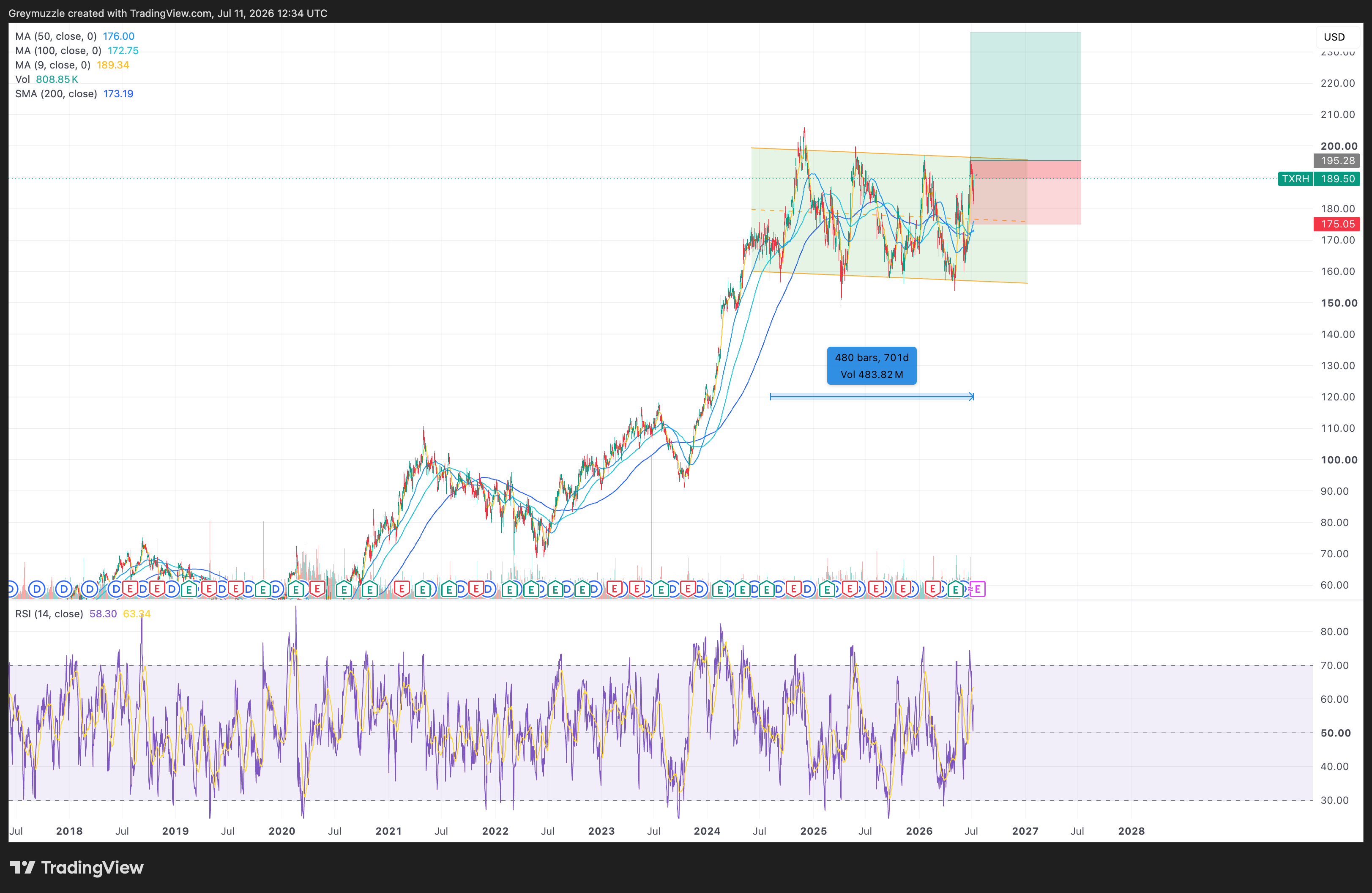
$TXRH — Texas Roadhouse. Two years in a box, knocking on the lid.
A good restaurant can always get more expensive. Or not — which is rather the point.
I like this one. Fundamentally solid business that has spent two years grinding sideways in a slightly sagging channel, roughly 160 to 195. Price is at the upper rail right now.
Entry: not chasing the touch. I want to see some churn at the upper boundary first — price loitering under the lid instead of bouncing off it — and I’ll take the long before the breakout, not after it.
Target: ~235
Stop: 175 as the base case; will be tightened depending on how that churn shapes up.
Why: two years of range builds fuel, and whoever has been selling that ceiling eventually runs out of stock to sell.
One thing on management: breakouts fail more often than the textbooks admit, so this position gets managed actively, not set-and-forget.
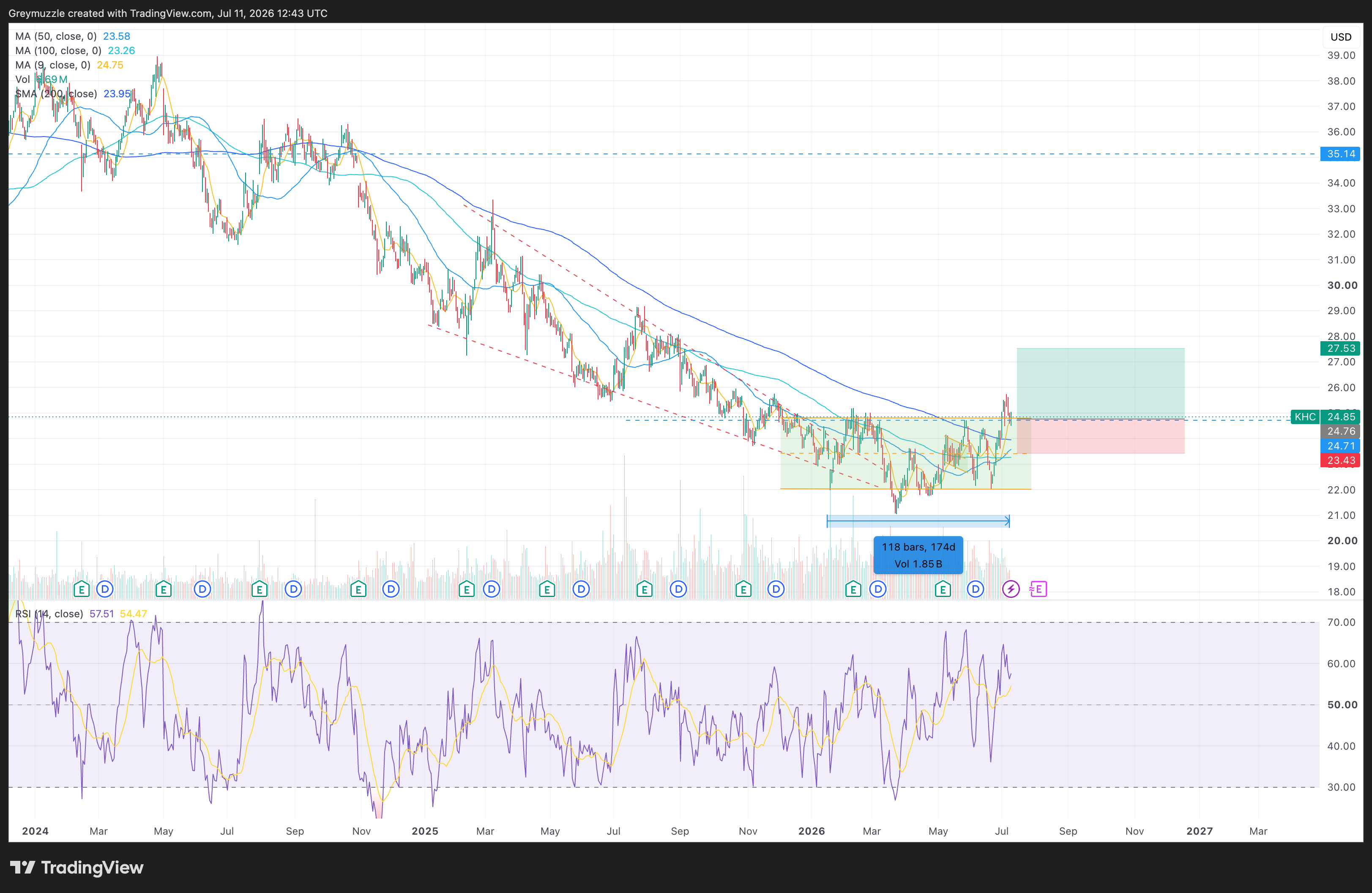
$KHC — Kraft Heinz. The terminally ill patient.
Some stocks are dying for years and never quite get around to it. Once in a while, one of them gets up and walks.
This patient has cost me real money several times over the past five years — every “bottom” turned out to be a landing, not a floor. But the multi-year downtrend has tightened into a falling wedge, price has stopped making new lows, and it’s now pushing at the upper boundary. When a chart everyone has left for dead stops going down, I start paying attention.
Entry: ~25, on the break of the wedge
Target: ~28
Stop: ~22.3
Why: three years of sellers finally look tired, and nobody on the street is positioned for this thing going up.
Resurrections are rare and I’ve paid tuition on this name before — so the size is small and the stop is honored, not negotiated.
Same frame every week: this is what I'm watching and how I think about it — not advice, not a signal service, not a recommendation to buy or sell anything. I've been getting things wrong since 2006, and I log every result, the green and the red. Your size, your stops, your account.